


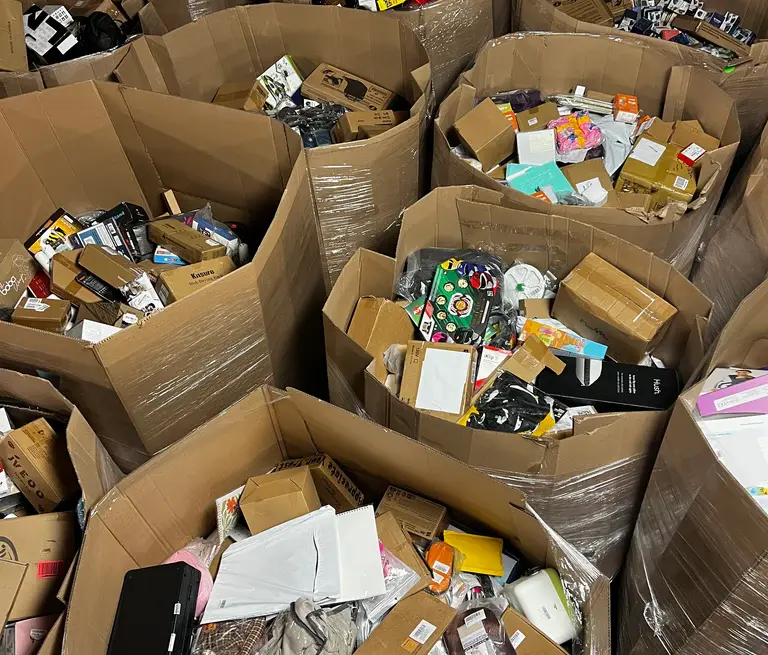
Receiving a liquidation truckload is a half-day job that rewards preparation and punishes improvisation. A trailer full of pallets arrives with a driver on a schedule, and you need space, equipment, and people ready before the doors open. This guide walks through the decisions and the routine, so the day goes calmly.
Choose dock or liftgate delivery in advance
There are two common ways a truck gets unloaded, and which one applies depends on your site.
- Dock delivery: the trailer backs up to a loading dock whose height matches the trailer bed, so a pallet jack or forklift rolls straight off. This is the fastest method.
- Liftgate delivery: the truck has a hydraulic platform at the back that lowers pallets to the ground. This is standard in the US for locations without a dock, and it takes more time per pallet.
Tell the seller which one you need when you order. Liftgate delivery is standard with us, and tracking is emailed once the freight is booked. Make sure the carrier knows if your site is residential, has tight access, or needs an appointment, because those details change what truck and equipment are sent. Our shipping and freight page explains how freight works, including that it is included in the price.
Check the street too. A long trailer needs room to approach, turn, and park. If your road is narrow, ask whether there is a nearby lot or a wider spot where the driver can unload.
Plan crew and equipment
Unloading a trailer is heavy, repetitive work. Decide who does what before the truck arrives.
- A forklift or a pallet jack, ideally both. A standard pallet is about 48 x 40 inches, and a loaded one is heavy, so a manual jack is slow on rough ground.
- A second jack for staging inside, so the first can keep going.
- At least two or three people: one to guide, one to count, one to move.
- Gloves, safety shoes, and a box cutter for stretch wrap.
- A clipboard and a camera for photos and counts.
If you rent equipment, arrange it the day before. Do not run a forklift unless you are trained and licensed to do so; hire a qualified operator if you need one, and ask a safety professional about local rules.
Prepare the receiving area
Before the truck arrives, clear a staging area close to the door. You want a flat, dry space with enough room to spread out pallets in rows, with aisles between them so you can walk around each one.
- Measure the area and mark a grid on the floor with tape.
- Remove clutter, cords, and anything that could trip your crew.
- Open the door fully and check the threshold, so the jack does not catch.
- Have a table or cart nearby for paperwork and tools.
- Keep children and pets out of the area.
- Put the camera on a charger so you can take photos throughout.
A clear plan shortens the day, and a short briefing with the crew before the truck arrives keeps everyone clear on who counts, who moves, and who talks to the driver. If the area is wet or sloped, put down boards or a ramp so the pallets stay stable.
Unload, stage, and count
When the truck arrives, greet the driver and confirm the delivery details together. Then work in a steady loop.
- Ask the driver to open the trailer and wait while you take a wide photo of the load as it stands.
- Check that the load looks intact: stretch wrap in place, no leaning stacks, no obvious crushing.
- Move pallets one at a time to the staging grid, and number them on a tag as they come out.
- Take a photo of each pallet from two sides as it lands.
- Count pallets against the paperwork as you go.
- Do not stack pallets in the staging area until the count is done.
Photograph anything that looks off right away, including damage to wrap, crushed boxes, or open cartons. Do it while the driver is still there, so the record is clear. Keep the pictures with your order number.
Paperwork on arrival
Know which documents matter, and keep them together.
- Bill of lading: the carrier’s receipt for the shipment. It lists the pallet count and the shipper.
- Packing list or manifest: the lot’s contents, either itemised or as a category breakdown.
- Order confirmation: what you paid for, and the freight terms.
- Your own receiving sheet: date, time, pallet count, and notes on condition.
Before you sign for the delivery, compare the pallet count on the paperwork with what came off the truck. If something is missing or obviously damaged, write it on the delivery receipt before signing, and note it with a photo. Signing without noting issues makes it harder to raise them later. Check with your carrier or a freight professional if you are unsure what to write.
Then contact the seller. Our returns policy gives 14 days, so start your inspection quickly and send the details in writing. International buyers should also keep in mind that they cover their own import duties and taxes, and a customs broker can advise on the paperwork.
Count, sort, and shelve the contents
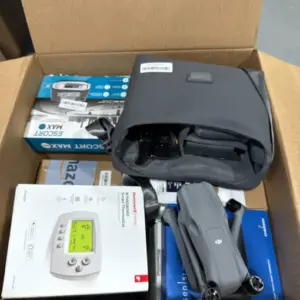
Once the truck is gone, you can slow down. Open each pallet, check the contents against the manifest or category breakdown, and sort the items by type. Test anything electronic. Move sorted stock to its permanent place, and log what you have.
Resist the urge to store everything in a heap, and give every pallet a location label so you can find it again in a week. A tidy receiving process pays for itself when you start listing. For a truckload, look at options like Mixed Truckload Lots and Electronics Truckload Lots to see what a full load can look like.
FAQ
How long does unloading a full trailer take?
It depends on your equipment, your crew, and the pallet count. A dock with a forklift is quick. A liftgate with a hand jack is slower, so plan a generous window.
What if a pallet looks damaged?
Photograph it, note it on the delivery receipt before signing, and contact the seller with your photos and order number.
Do I need a forklift?
Not always. A pallet jack can handle many loads on smooth ground, but a forklift saves effort when you are moving many pallets or stacking.
If you are weighing a full load, browse the shop all lots page, or ask us about delivery to your site.







Ready to stock up?
Shipping to your door is covered in every listed price, so checkout shows no separate freight charge. Curious what a pallet holds? Message us and we will send its latest manifest ahead of your order.
Cookies help this website work as it should. If you carry on browsing, you accept our cookie policy.
I AcceptYour Cart

30 Sealed Pokemon Ultra-Premium Anniversary Collections, Daytime and Night
Price range: $1,250.00 USD through $3,750.00 USD
Adult Diaper Pallet: 300 Packs of Absorbent Products, Mixed Brands and Sizes
Price range: $350.00 USD through $1,000.00 USD
All Categories
Search
30 Sealed Pokemon Ultra-Premium Anniversary Collections, Daytime and Night
Price range: $1,250.00 USD through $3,750.00 USDAdult Diaper Pallet: 300 Packs of Absorbent Products, Mixed Brands and Sizes
Price range: $350.00 USD through $1,000.00 USD