


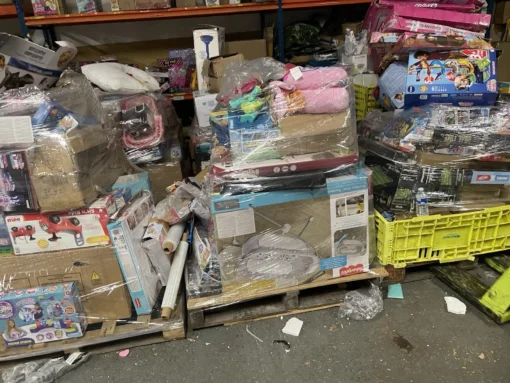
Unsellable liquidation inventory is not a sign you bought badly; it is a normal by-product of the business. Every pallet has a few items that are broken, incomplete, or simply will not sell at a price that covers your effort. The difference between a tidy operation and a cluttered one is whether those items have a route out. Here is a practical way to triage them.
Set a leftover rule before the pile forms
The worst leftover pile is the one with no deadline. Items sit in a corner, take up space, and make the whole room feel stuck. Decide in advance how long something gets to prove itself.
A simple rule works: an item gets a fair listing, one price reduction, and one bundle attempt. If it still has not sold, it moves to the exit list. That rule removes guesswork, and it frees you from the urge to hold on to everything.
Choose one place for leftovers: a single shelf or a set of bins with clear labels. Do not let them scatter across the room. A defined space makes it obvious when it is full, and a full bin means it is time to clear it.
Triage into four exits
Do this on the same day you process the pallet, while the context is fresh. You remember which unit rattled, which box was crushed, and which item looked fine but failed its test, and that memory is gone a week later.
Sort every leftover into one of four routes. Write the route on a label so you do not handle the same item twice.
- Parts and repair: items that are broken but have working components.
- Donation: usable goods that simply did not sell.
- Recycling and e-waste: items that cannot be used and should not go in the trash.
- Bulk flip: items that are fine but low in value individually.
If you are unsure, ask what a buyer would do with it. If a buyer could use part of it, it is parts. If someone could use all of it, it is donation or a flip. If nobody could, it is recycling.
Parts sales
Many broken items still have value in pieces. A tool with a dead motor may have a good battery, a case, or a charger. A game console might have a working power supply. A set with missing bricks still has pieces that builders want. A lamp with a cracked shade still has a fitting and a base.
- Test components separately and label what works.
- List parts clearly as parts, not as working items.
- Describe the fault honestly and include photos of the exact piece.
- Keep a bin of cables, chargers, and small hardware sorted by type.
Repair buyers search by model number, so write it in the title. Selling a part often takes only a few minutes, and the shipping is cheap. If the item is not worth the time, move it on to the next route.
Donation
Usable goods that did not sell can often be donated to local charities, schools, shelters, or community groups. Call before you go, because not every organization takes every category, and many will not accept electronics, car seats, or items with safety concerns.
Clean the items first, and pack them in labeled boxes. Ask for a receipt for your records. Tax rules vary, so check with your state or a tax professional about whether and how a donation can be recorded. Do not assume it will be deductible.
Be honest about condition. Donating broken goods shifts your disposal problem onto someone else, and good organizations will turn them away.
Recycling and e-waste
Electronics and batteries should not go in the regular trash. Many areas have local e-waste drop-off sites, retailer take-back programs, or municipal collection days. Check your local government website or ask your waste authority for the rules in your area.
- Remove batteries where you can, and keep them separate.
- Wipe or remove personal data from any device that stored it, and do a factory reset where available.
- Keep cardboard, plastic, and metal in separate bins to make drop-offs simpler.
- Look for scrap metal buyers for cables, small appliances, and metal frames.
Recycling is also a clean way to handle goods you do not want to risk selling, such as items with damaged batteries or safety defects. When in doubt, do not list them.
Bulk flips to other resellers
Some leftovers are perfectly fine items that just do not justify a listing. Single mismatched shoes, odd lots of accessories, and low-value housewares fall into this group. Package them in a big lot and sell them to another reseller.
- Group by category, so buyers know what they are getting.
- Count the units and photograph the whole lot, plus a few close-ups.
- State the condition plainly, and be clear about what is not included.
- Price for a quick sale, because the point is clearing space.
- Offer local pickup to keep things simple.
A bulk flip does not feel exciting, but it turns shelf space back into room for new stock. If you want more ideas about what to sell, take a look at our Assorted Merchandise Lots category, where mixed items can be sorted into the routes above.
Keep the floor clear as a habit
Once a week, do a short sweep. Walk the room, pull anything that has outlived your rule, and move it to its exit. Once a month, clear the exit bins: drop off the donation box, take the e-waste to the drop site, and ship the parts.
Track the pattern. If one category keeps producing leftovers, adjust your buying. If a certain failure keeps appearing, ask the seller about grading or the manifest before the next order. Our returns policy allows returns within 14 days, so report real mismatches inside that window rather than letting them become leftovers.
FAQ
How do I decide between donating and selling cheaply?
If a quick low-priced listing or bulk flip would move it this week, sell. If it has sat through your rule, donate it and free the space.
Can I throw away broken electronics?
Check your local rules. Many places ask that electronics and batteries go to a drop-off site instead of the regular trash.
Is it worth selling parts?
Sometimes. If you can test and list a part in a few minutes, and it sells for more than the shipping and effort, yes. If not, recycle it.
For your next order, browse the shop all lots page and ask for a manifest or category breakdown, so you can plan an exit for every item before it arrives.
Ready to stock up?
Shipping to your door is covered in every listed price, so checkout shows no separate freight charge. Curious what a pallet holds? Message us and we will send its latest manifest ahead of your order.
Cookies help this website work as it should. If you carry on browsing, you accept our cookie policy.
I AcceptYour Cart

30 Sealed Pokemon Ultra-Premium Anniversary Collections, Daytime and Night
Price range: $1,250.00 USD through $3,750.00 USD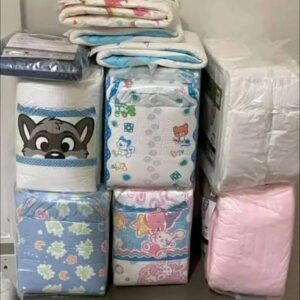
Adult Diaper Pallet: 300 Packs of Absorbent Products, Mixed Brands and Sizes
Price range: $350.00 USD through $1,000.00 USD
All Categories
Search
30 Sealed Pokemon Ultra-Premium Anniversary Collections, Daytime and Night
Price range: $1,250.00 USD through $3,750.00 USDAdult Diaper Pallet: 300 Packs of Absorbent Products, Mixed Brands and Sizes
Price range: $350.00 USD through $1,000.00 USD